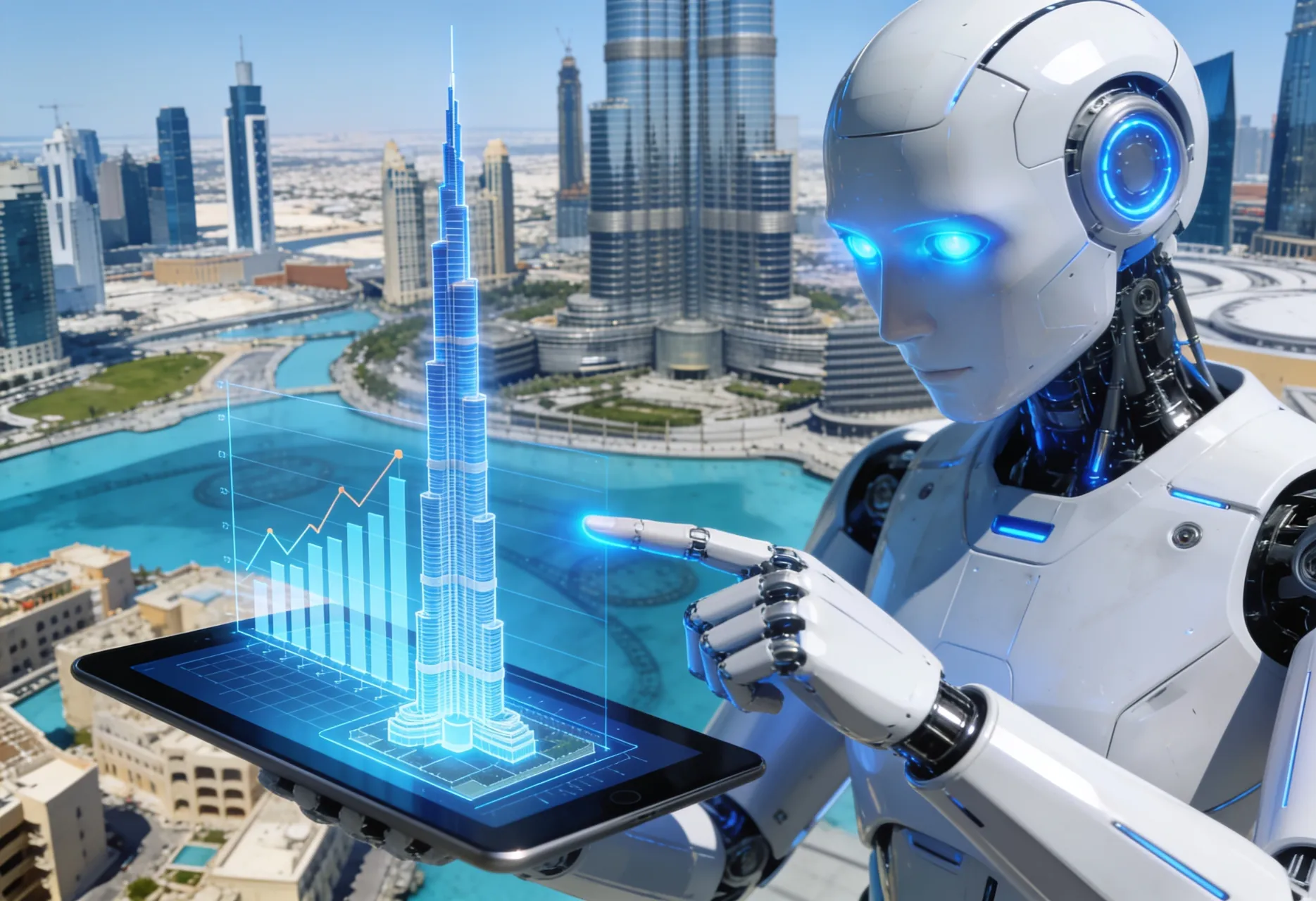
Dubai has long been a city defined by its vertical ambition, but its latest architectural milestone is looking closer to the ground—specifically, at how the ground is broken. In late January 2026, Dubai Municipality launched a global challenge to construct the world’s first residential villa built entirely using robotic construction systems.
This project represents a shift from “smart homes” to “smart building,” moving beyond experimental 3D printing toward a fully automated, end-to-end construction process.
The Vision: From Software to Structure
Unlike previous projects that used isolated robotic arms for 3D printing concrete, this villa aims to be a “living laboratory.” The goal is to automate every phase of the build, including:
Structural Assembly: Robotic systems will assemble walls and foundations with millimeter precision.
Humanoid Integration: Through the “Red Link” initiative, humanoid robots and robotic dogs (designed by partners like the Würth Group) will perform tasks typically reserved for human crews, such as site inspection and complex material handling.
Photo credits to: Construction WeekA Global Consortium
Dubai is not undertaking this feat alone. The project is managed by a powerhouse consortium of over 25 international technology companies and academic institutions. Key players include:
Zacua Ventures: A global venture fund specializing in construction technology (ConTech).
The Würth Group: A German industrial giant providing the hardware and robotic execution.
04 ConTech Valley: A newly activated research hub at Expo City Dubai where these technologies are being trialed before real-world deployment.
The 70-70 Strategy
The robotic villa is the flagship of Dubai’s 70–70 Strategy for 2030. This roadmap targets two bold goals for the emirate’s construction sector:
70% Off-site Manufacturing: Shifting the bulk of building work into controlled factory environments.
70% Factory Automation: Ensuring those factories are powered by autonomous systems to boost quality and speed.
By tackling the global labor shortage and the environmental footprint of construction, Dubai is positioning itself as the “Global ConTech Hub.” The project isn’t just about building one house; it’s about creating a scalable, programmable blueprint for cities of the future.